Floats without plastic
A sealed bamboo culm is a sequence of air chambers. The raft carries itself, so builders need no foam blocks or plastic drums to keep it on the surface.
FAD builders across West Africa need poles that float on their own, survive months at sea, and break down rather than drift forever when a raft is lost. That is what bamboo does, and it is what we load out of Tema by the container.
Pelagic fish gather under anything that floats. A FAD puts that behaviour somewhere a fleet can find it.
Bamboo poles are lashed into a platform of roughly four to six square metres. The sealed chambers inside each culm supply the buoyancy, so the raft needs no added floats. Builders add lashings and, where they want shade, palm fronds.
A panel of netting or fronds hangs beneath, weighted so it stays close to vertical. It extends the structure fish are drawn to, and slows the raft's drift.
Tuna, mahi-mahi and wahoo congregate within days. Artisanal fleets work anchored FADs set a few kilometres offshore; industrial purse seiners work drifting ones tracked by buoy.
Six reasons the material keeps winning over plastic and timber.
A sealed bamboo culm is a sequence of air chambers. The raft carries itself, so builders need no foam blocks or plastic drums to keep it on the surface.
FADs go astray. A bamboo raft rots and sinks; a synthetic one keeps drifting and fishing for years. This is why regulators have moved toward biodegradable materials.
Solid poles present nothing for turtles, sharks or rays to be caught in — the risk that loose synthetic mesh creates.
Our poles are treated against rot and borers before they ship, so a raft survives repeated sets rather than one season.
Bamboo reaches harvest size in three to five years. A lost or damaged raft is a minor cost, not a capital one.
Poles are cut, lashed and repaired on the beach without a workshop, which suits artisanal fleets and local FAD yards.
ICCAT, which manages tuna fisheries across the Atlantic including Senegalese and Ghanaian waters, has agreed to make biodegradable, non-entangling FADs mandatory. Fleets that still build on plastic are facing a change of material; those already on bamboo are not.
Treated and heat-treated poles, bundled and strapped for container loading. Cut to your lengths where the order justifies it.
Working to a raft specification rather than a pole size? Send the dimensions and the number of rafts and we will work back to the pole count and the container fill.
A recent container of poles for a FAD manufacturer in Senegal, loaded by hand at our Tema yard.
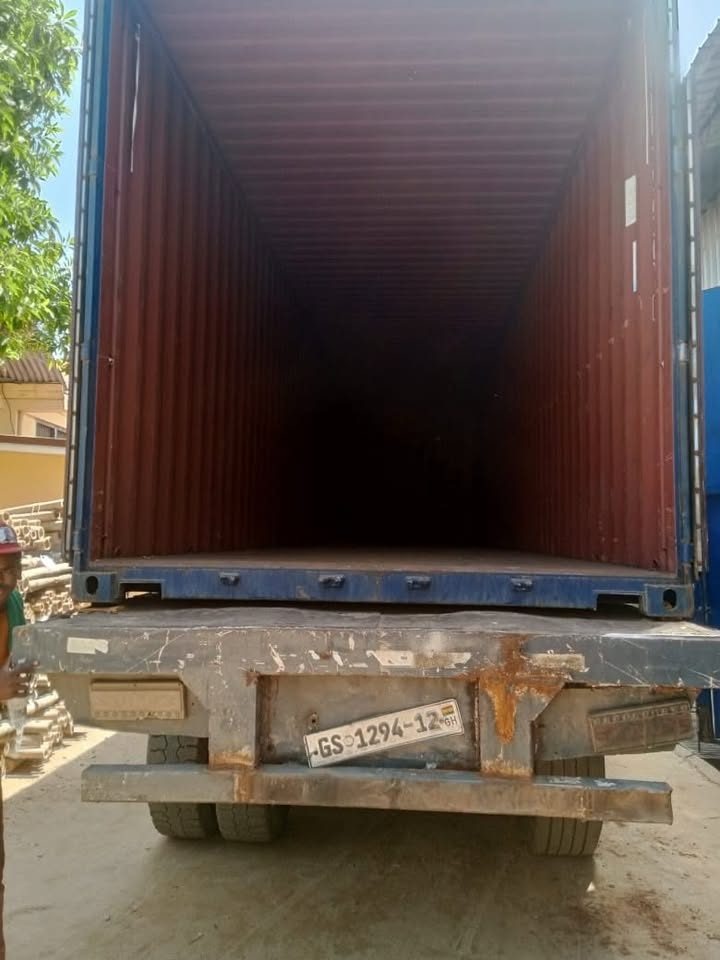
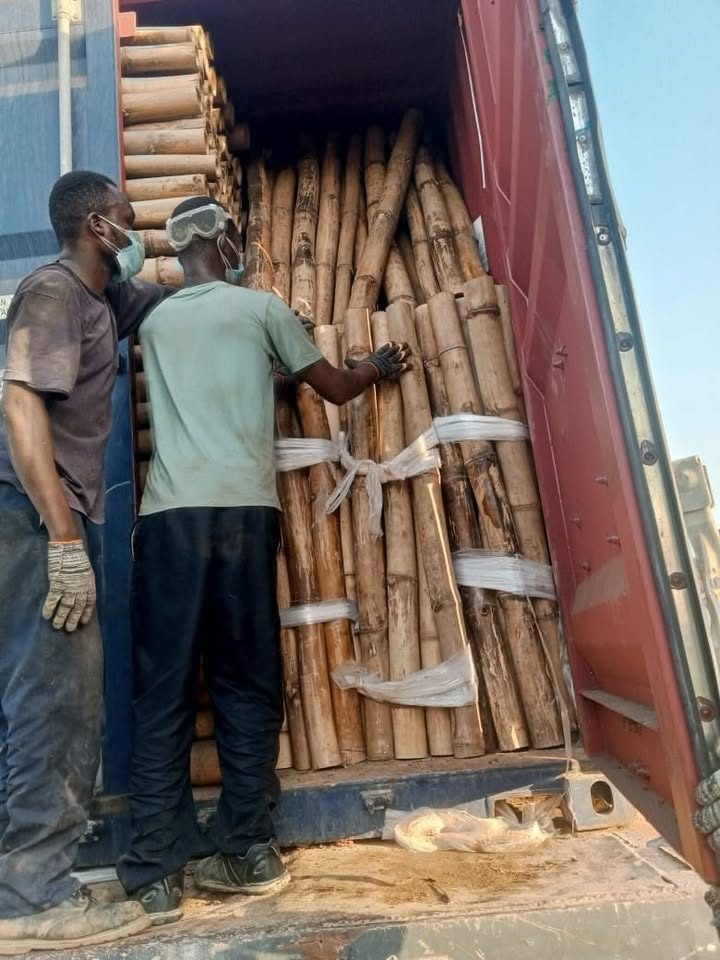
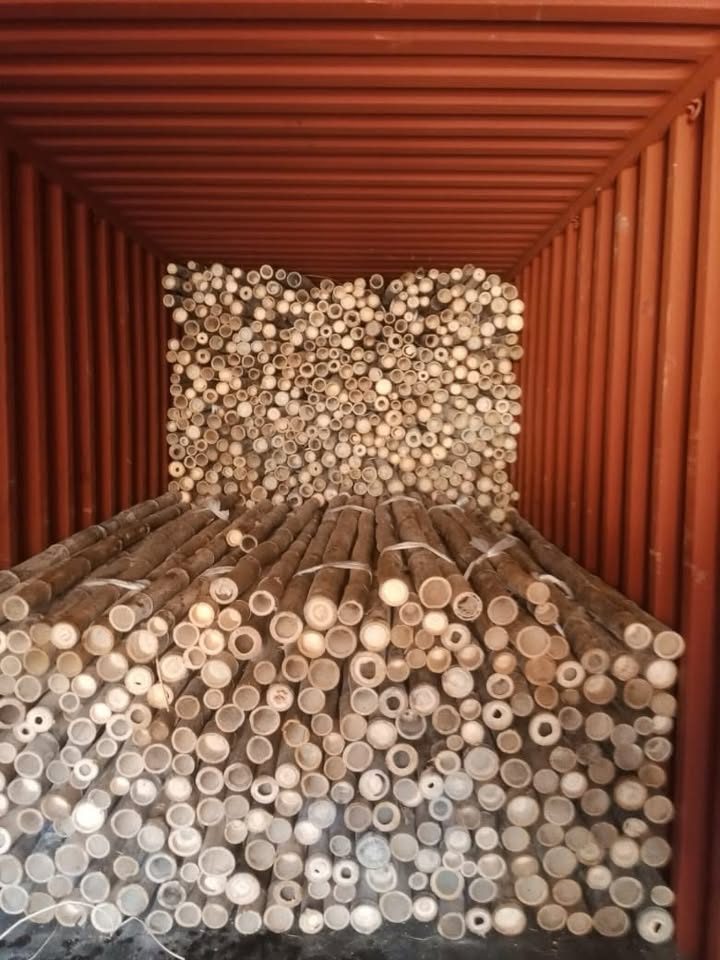
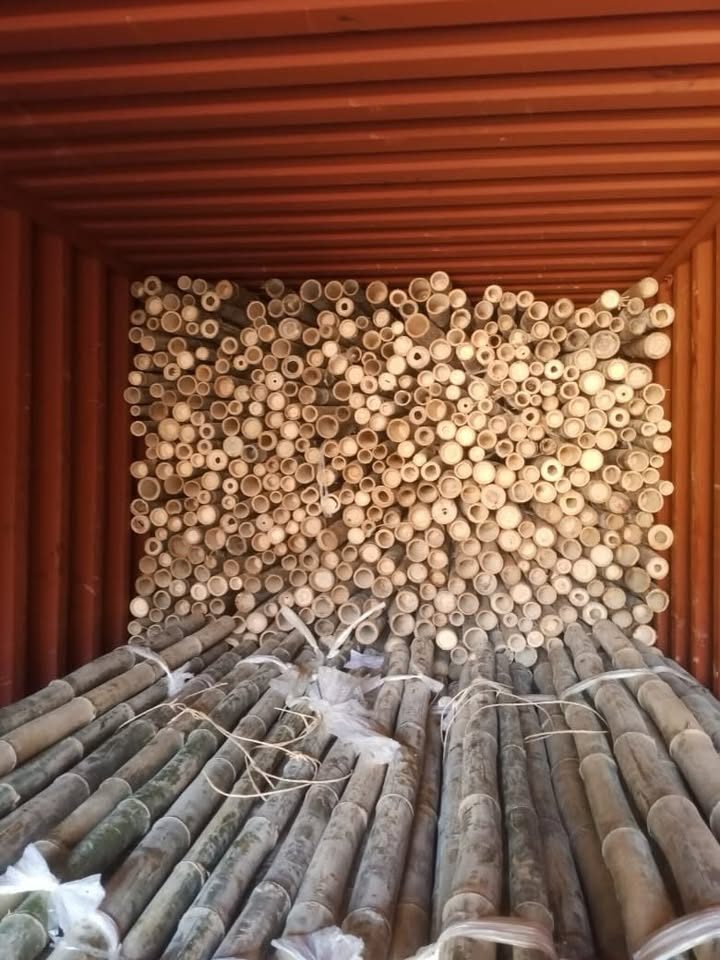
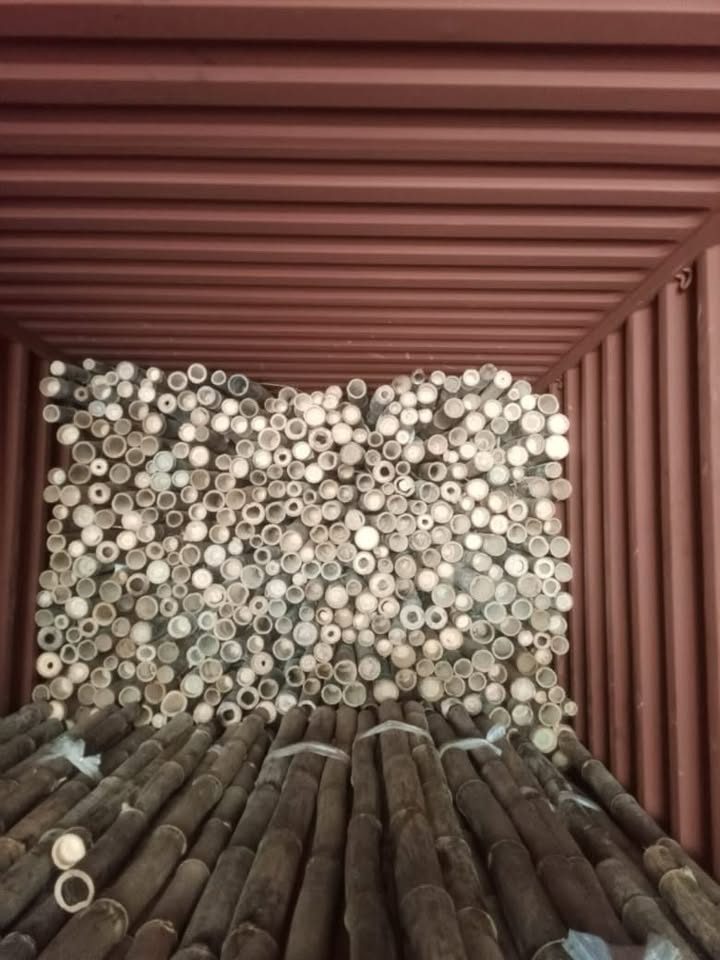
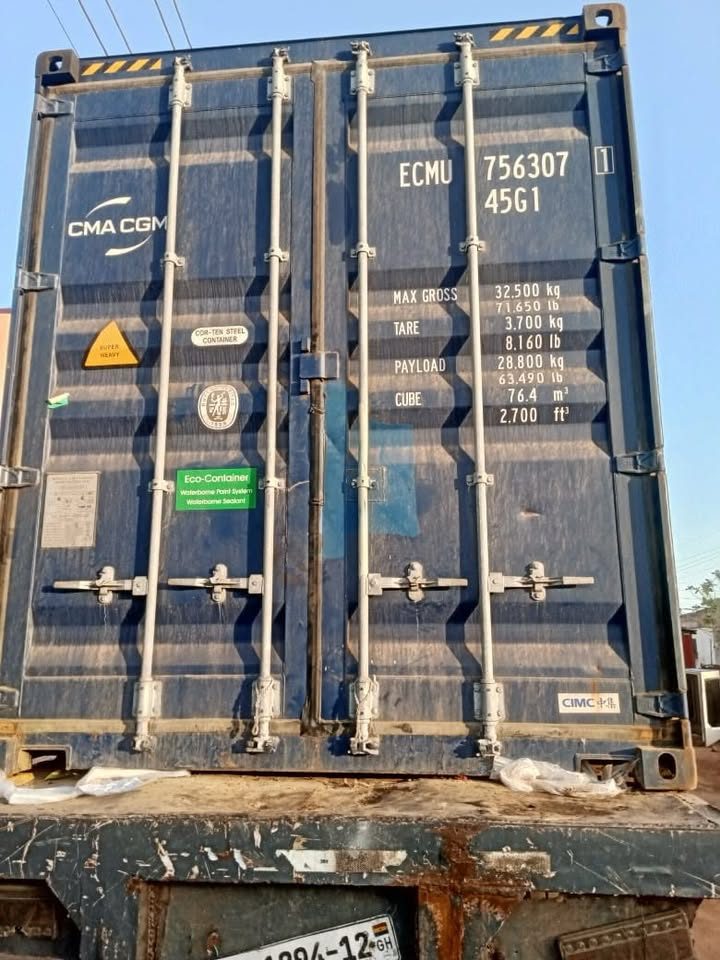
Figures above are the container’s rated capacity, not the weight of this particular load — bamboo fills the cube well before it reaches the weight limit. Poles are bundled, strapped and packed tight so nothing shifts on the voyage. We handle loading at the yard and the paperwork for export out of Tema.
Send the pole sizes and the quantity, or the raft dimensions and how many you need, and we will quote on the container.
Message us on WhatsApp Use the enquiry form